
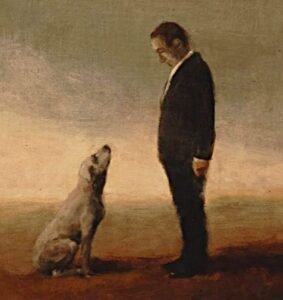
Dogs Need Hierarchy: Why “No Alpha” Theories Are Dangerous
One of the latest trends circulating online is the idea that dogs don’t need a hierarchy. This notion is not only divisive — it’s delusional.
Dogs thrive when they live within a clear hierarchy. For some dogs, achieving the alpha position is an innate drive. If the owner fails to establish and maintain that leadership, the dog will step up and take the role itself.
If you watch two well-socialised dogs interact, you’ll notice they rarely tolerate being jumped on. Jumping is a dog’s way of testing strength and establishing rank within the pack. Allowing your dog to jump on other dogs in public not only teaches poor social skills — it puts your dog at real risk of being attacked. I’ve witnessed this far too many times.
Dismissing hierarchy is especially risky with working dogs bred for guarding or aggression. As these dogs mature, their natural drive intensifies. Without clear leadership and boundaries, seemingly minor issues can escalate into dangerous situations — including attacks on their owners or family members.
Pure positive (or force-free) training often creates the same issue: weak leadership. When training relies heavily on constant rewards and pleading, dogs quickly learn they only need to obey when food is present.
Every week I work with clients who spent months — sometimes over a year — with force-free trainers and saw little to no progress. In many cases, the unwanted behaviours actually got worse.
When these clients switch to balanced training, they typically see dramatic improvement in just 1 to 3 sessions. Balanced methods work because they:
Final Thought Ignoring hierarchy doesn’t make you kind — it makes you your dog’s doormat.
If you would like to book a session or to get more information, Contact Us – Sidney Aarons
Check out Sidney’s YouTube channel (5015) Sidney Aarons Professional Dog Trainer – YouTube
.