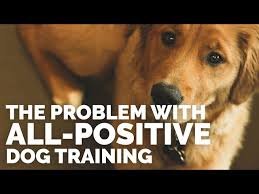
Why Bribery Leads to Ignored Commands and How Balanced Boundaries Build Better Behavior
As a professional dog trainer with over 25 years of experience, I’ve seen countless owners struggle with dogs that seem to “tune them out” despite endless treats and praise. The culprit? What many call “positive-only” training – a method that relies solely on rewards without any real consequences for unwanted actions. While it sounds humane on paper, in practice, it often teaches dogs to ignore their owners unless a bribe is on the table. In this post, I’ll break down how this happens, why incorporating boundaries and negative consequences fosters a positive bias toward good behaviours, and how mastering a 100% reliable recall can transform your dog’s responsiveness.
## Understanding Bribery in Dog Training: When Rewards Backfire
Let’s start with the basics. Positive-only training emphasizes rewards like treats, toys, or affection to encourage desired behaviours. The idea is rooted in operant conditioning’s positive reinforcement quadrant – add something good to increase a behaviour. But here’s where it goes wrong: without careful timing and fading of rewards, it devolves into bribery.
A bribe is offered *before* the behaviour, essentially dangling a reward to coax compliance. For example, you wave a treat to get your dog to come, sit, or stop jumping. Over time, dogs learn to weigh the options: “Is this treat worth more than chasing that squirrel or ignoring my owner?” If the answer is no, they blow you off. This creates dependency – your dog only responds when they see the payoff upfront, ignoring commands otherwise.
Critics of positive-only methods point out that dogs become conditioned to respond to the treat, not the owner or the relationship. In real-world scenarios, like off-leash walks or distractions, this falls apart. Trainers like those from all over the world argue that without consequences, dogs learn they can selectively obey, leading to frustration for owners and potential safety risks for the dog. I’ve witnessed this firsthand: puppies trained purely with treats often escalate to begging or demanding rewards, turning training into a negotiation rather than a partnership.
On the flip side, true reinforcement comes *after* the behaviour, building intrinsic motivation. But pure positive-only skips the other quadrants, like negative punishment (removing something good) or even mild corrections, which can clarify boundaries without harm.
Creating Boundaries and Negative Consequences: Building a Positive Bias for Good Choices
Now, let’s flip the script. Balanced training – which incorporates all four operant conditioning quadrants – uses rewards alongside consequences to guide behaviour. Negative consequences aren’t about harsh punishment; they’re about clear communication that certain actions lead to undesirable outcomes, making good behaviours more appealing by contrast.
For instance, negative reinforcement removes an aversive stimulus when the dog complies (e.g., releasing leash pressure when they heel). Positive punishment adds something unpleasant to decrease and eliminate a behavior (e.g., a firm “no” or a leash correction for jumping). When done fairly and timed well, these create boundaries that dogs understand and respect.
The result? A “positive bias” toward desirable behaviours. Dogs learn that following commands leads to rewards and freedom, while ignoring them has consistent, fair repercussions. This clarity reduces stress and builds trust – your dog isn’t guessing; they know the rules. Balanced trainers emphasize that corrections aren’t cruel; they’re tools to address real issues like aggression or anxiety that positive-only fails to fix. Studies show mixed results: while some research links aversives to increased stress, others highlight that pure positive lacks control in high-distraction scenarios, potentially endangering dogs.
In my Straight-Line System, we use boundaries with clear communication to teach dogs that life with rules is rewarding. A dog pulling on the leash? A gentle correction redirects them, followed by praise and a treat for walking nicely. This creates a bias: “Heeling feels good because it avoids discomfort and earns treats.” Over time, dogs choose compliance willingly, strengthening the owner-dog bond.
The Power of 100% Reliable Recall: The Ultimate Anti-Ignoring Tool
No command exemplifies this better than recall – teaching your dog to come when called, every time. A reliable recall isn’t just convenient; it’s a lifesaver, preventing escapes, chases, or dangers. And it’s the perfect antidote to ignoring, as it proves your dog values your cue over distractions.
Achieving 100% reliability requires consistent practice:
1. **Start Simple**: Use high-value rewards in low-distraction areas. Call your dog’s name + “come” in an excited tone, reward lavishly when they respond. And have your dog on leash to teach the dog not to ignore.
2. **Build Gradually**: Increase distractions slowly. Practice daily with 50+ repetitions, always rewarding success to “charge” the cue as something amazing.
3. **Incorporate Consequences**: If they ignore, use negative punishment (e.g., end playtime) or tools like e-collars for off-leash reliability in balanced methods. Avoid repeating the cue – it teaches irrelevance.
4. **Make It Fun**: Use longer commands eg; ‘come here” for clarity in distance recalls, and always end with positivity.
With this, dogs learn ignoring isn’t an option – recall becomes a reflex tied to joy and safety. In my classes in Canberra, we achieve this through balanced techniques, turning “selective hearing” dogs into attentive companions. I am offering 30 minute sessions x 3 that is solely dedicated to teaching recall. Any dog can learn to reliably recall, regardless of size, temperament and drives that your dog may have.
If you live in and around Canberra you know all too well the wildlife is abundant, which is something I love and they should be allowed to live in peace without being harassed, injured and potentially killed by a dog that will not obey its family. I love the fact I walk past Kangaroo’s etc, with my two Malinois off-leash and with a quick direction command, Thor and Artimesia will continue to walk along with me and all is well.
Wrapping Up: Ditch the Bribes for True Balance
Positive-only training isn’t evil, but it’s incomplete. By ignoring consequences, it inadvertently teaches dogs to ignore owners. Balanced approaches, with fair boundaries and negative outcomes, create a framework where good behaviours shine. And nailing that reliable recall? It’s the proof: a dog who chooses you every time.
If you’re in Canberra or nearby, join my puppy school for hands-on guidance. What’s your biggest training challenge? Share in the comments!
*Note: Always consult a professional for severe issues. Training methods should prioritize welfare – balanced doesn’t mean abusive.*